


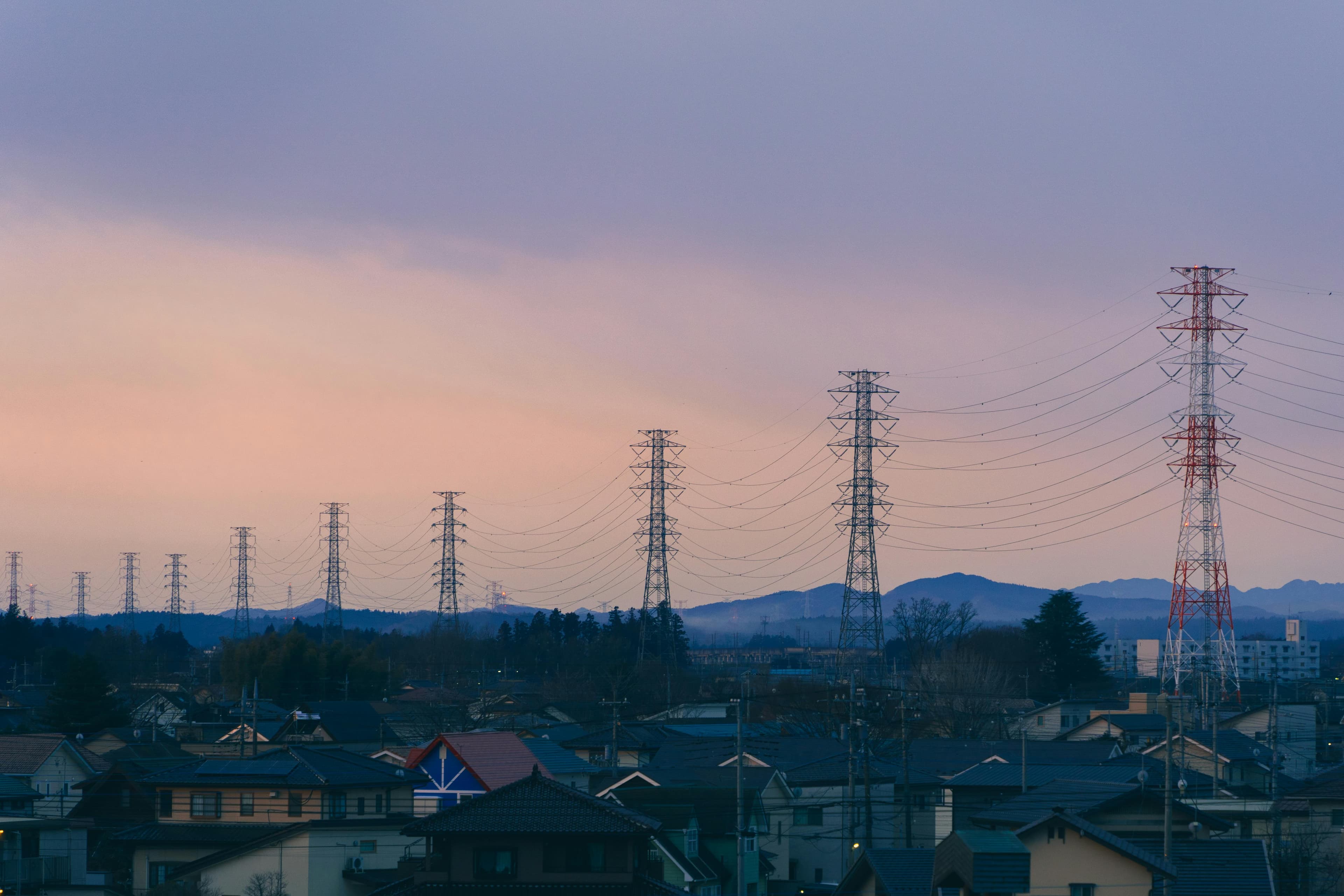
Key takeaways
- Australia's official radiation authority (ARPANSA) finds no established scientific evidence that residential powerline exposure causes health effects.
- Despite the science, Australian valuers consistently price a 3 to 10% discount into properties affected by high-voltage overhead transmission lines. Owner-occupiers actively avoid them.
- The price impact is real but it is driven by market psychology, not physics. That is a meaningful distinction when you are weighing whether the discount is genuinely free money.
- There are also tangible non-health costs: visual amenity, easement restrictions on trees and structures, and a narrower buyer pool when you go to sell.
What "powerlines" actually means
The word covers two very different things in Australian property conversations.
- Distribution lines are the local powerlines you see on most suburban streets, carrying a few thousand volts to homes from the nearest substation. They sit on timber or concrete poles and feed individual houses.
- , or transmission lines, are the steel lattice towers carrying bulk electricity between regions. These are the ones with the biggest market discount and the loudest concerns.
A few other terms you will see:
- is the corridor on or alongside the property where the network operator has rights.
- is the technical name for the magnetic field powerlines emit. ELF stands for "extremely low frequency".
- (µT) is how that field is measured.
The distinction matters because the price discount and the lived experience scale with the size of the line, not the existence of any line at all. A modest distribution line on the kerb is usually fine. A six-tower transmission corridor visible from the back deck is a different conversation.
What the science actually says
Australia's official authority on radiation safety is ARPANSA, the Australian Radiation Protection and Nuclear Safety Agency. Their published position on residential powerline exposure is direct:
There is no established scientific evidence that exposure to electric and magnetic fields found around the home, the office or near powerlines causes health effects.
ARPANSA also acknowledges a weak association in epidemiological studies between unusually high prolonged ELF magnetic field exposure and childhood leukaemia. They are explicit that this association is not supported by laboratory studies, animal studies or any credible biological mechanism, and that the epidemiological evidence itself is weakened by selection bias and confounding factors. The World Health Organization and the International Commission on Non-Ionizing Radiation Protection (ICNIRP) reach the same conclusion.
Australian electricity operators apply what is known as the "prudent avoidance" principle. They follow the ICNIRP guidelines as a precaution, while the underlying scientific consensus remains that residential exposure does not pose a measurable health risk. In short: the people actually responsible for the lines are not behaving as if there is a hidden danger. They are behaving as if it is safe and being careful anyway.
What the market actually does
The market does not always reflect the science.
Source: Pacific Rim Property Research Journal (2013) and the Wagga Wagga study, hosted by QUT. The discount is the median range that Australian valuers and real estate professionals report applying to HVOTL-affected properties relative to comparables. International studies (US Journal of Real Estate Research) find larger discounts of 18% or more for lots immediately adjacent to high-voltage lines.
Why the gap between science and market? Two reasons. First, perception is sticky. The "powerlines cause cancer" idea has been in the public conversation since the 1970s, and a century of newspaper articles outweigh a single ARPANSA fact sheet for most buyers. Second, the discount becomes self-fulfilling. Once valuers and real estate agents apply it, comparable sales reflect it, and the next valuer follows the trail. That is how a perception becomes a price.
The honest read for buyers: the discount is real, but the underlying reason is not what most people think. You are paying less because future buyers will too, not because there is a measurable hazard.
Olivia and Noah: same builder, two backyards
Olivia and Noah are looking at two near-identical four-bedroom houses on adjacent streets in outer-western Sydney. Same developer, same year, same floor plan. The difference is the back fence. Olivia's preferred house backs directly onto a transmission corridor with two towers visible from the kitchen window. Noah's is two streets over with no transmission infrastructure in line of sight.
| Olivia (backs onto HVOTL) | Noah (no powerlines visible) | |
|---|---|---|
| Listing price guide | $795,000 | $845,000 |
| Visible from kitchen and deck | Yes; two transmission towers | No |
| Background magnetic field at backyard | Elevated but well below ICNIRP limits | Suburban baseline |
| Tree and structure restrictions | Easement constraints on rear quarter of block | None |
| Buyer pool when you sell | Narrower; many owner-occupiers rule it out at the photo stage | Broad |
| Likely capital growth versus comparable | Tracks the suburb at a discount | Tracks the suburb |
Olivia saves around $50,000 on day one. Whether she is genuinely better off depends on how she plans to live in the house. If she is renting it out and the next tenant does not care, she captures the discount as yield. If she lives in it and works from a kitchen that looks straight at a tower for ten years, the discount is paying for daily visual amenity she has chosen to give up. And when she sells, the next buyer will apply the same discount she did.
Beyond the price tag
Three lived-experience angles the price tag does not capture.
1. Visual amenity
Transmission towers are big. A 132 kV lattice tower stands around 30 to 45 metres tall. From close range they dominate the back-of-house view, the deck, the kids' play area and most rear-garden photographs you might want to take. Distribution lines on the street are far less imposing but can still clutter the front-of-house view in older suburbs where overhead networks are still standard. Visual amenity is the most underrated cost of a powerline-affected property because it is the only one buyers experience every single day.
2. Easement restrictions
If a transmission line crosses your block, an easement is registered on the title. Within the easement you typically cannot plant trees that will grow tall, build a permanent structure, install a swimming pool, or store certain materials. The network operator retains the right to access the corridor for maintenance. Backyard dreams of a row of mature gums or a pool extension can quietly evaporate inside an easement. Always read the easement plan before you fall in love with a backyard.
3. The buyer pool when you sell
This is where the science-versus-market gap stings most. A meaningful share of owner-occupier buyers will not even shortlist a powerline-affected property, regardless of what ARPANSA or the WHO say. That smaller pool means more days on market when you sell, more pressure to negotiate, and a discount that has compounded through your hold period rather than narrowed. Investors with a long-term horizon are the natural buyer for this stock. Families browsing realestate.com.au on a Saturday morning are not.
Common misconceptions
- "I can hear them buzzing so they must be unsafe." The hum is corona discharge, the sound of small electrical breakdowns in the air around the conductors. It is louder in damp weather and tells you nothing about your health risk. It does tell you something about resale appeal.
- "ARPANSA isn't telling us the full story." ARPANSA's position aligns with the World Health Organization, ICNIRP and equivalent bodies in the UK, US, Canada and Europe. There is no rogue international agency. The science consensus is unusually consistent.
- "It will be fine because the lines are underground." Underground cables produce a magnetic field too. Because they sit closer to ground level, the field at the surface directly above the cable can be higher than at ground level under an equivalent overhead line. They tend to be quieter, less visible and easier to forget, but they are not zero-impact.
- "It's only the big transmission lines that matter." True for most cases, but a substation or a heavy-distribution corner pole on the boundary of your block can also carry a measurable market discount, around 10 to 20% in the Australian valuation literature.
- "I'll just plant a screen of trees." Some easements forbid planting tall trees. Even where they do not, the network operator has a right to trim or remove anything that threatens the line. Screening with vegetation is a longer game than most buyers expect.
Frequently asked questions
Related reading
 Critical property factor
Flood zones in Australia: what every property buyer should know
Flood-zone homes trade at around an 8.5% discount and lag the market for years. Here is what every Australian buyer should weigh before making an offer.
 Critical property factor
Why bushfire-zone homes trade at a premium, until they don't
Building a home to BAL-29 can add $30,000 to the price. The full picture of what bushfire-zone living costs Australian buyers, from construction to insurance to resale.
 Important property factor
How much is a north-facing house actually worth?
Australian buyers paid an average of $375,500 more for north-facing homes in 2025. And 'north-facing' does not mean what most first-time buyers assume.